
Everything That Made Me a Better Leader Happened Before I Knew That's What It Was.
By thirteen, I was delivering 250 newspapers a week, inserting seven to ten leaflets into each one before I could start. My bag couldn't hold them all, so I'd walk the full round home two or three times to collect more, all on foot, in the dark, in winter, for £4 a week. Nobody was checking. I just kept going.
From sixteen to twenty-one, I worked weekends and evenings in the electrical department of my local Co-op. The pay was still modest, but the education wasn't. I learned to really listen there, not to sell, but to connect. An elderly customer once spent twenty minutes choosing a kettle and toaster from George Foreman's matching range, then asked me to help him name them. I can't remember what we chose. I remember exactly why it mattered.
Those experiences didn't teach me about UX. They taught me that how you make someone feel is the work. Everything since has been an extension of that.
Evidence-Led. Even When Leadership Pushes Back.
I'm happiest close to the work. Not overseeing it, not delegating it away, but doing it: researching, synthesising, and making the case for users in rooms where commercial pressure dominates. That's a deliberate choice, not a limitation.
I back evidence over opinion, including my own. When the research says one thing and leadership says another, I hold the position. Not out of stubbornness, but because that's what rigorous research demands and what users deserve.
The meaning isn't in the title or the org chart. It's in the quality of the thinking, the integrity of the process, and the moment a decision changes because the evidence was too strong to ignore.
The Proof of Good Leadership Isn't Who You Manage. It's What Changes Because You Were There.
The people I've worked with, and many I didn't work with directly, have shown up for me at the moments that mattered most. Redundancy included. Not out of obligation, but because of what we built together. That's not something you can manufacture. It's something you earn, slowly, by leading the right way.
I'm not interested in leadership that depends on presence. I'm interested in the kind that outlasts it: the decision someone makes differently because of a conversation we had, the colleague who started asking better questions because the evidence was impossible to ignore, the team that shifted its thinking because the research made the case too strongly to dismiss.
That's what changes because you were there. Not the org chart. Not the headcount. The thinking, the confidence, and the decisions that outlast the role.
Staying Close to the Work Isn't a Style Choice. It's Where I'm Most Effective.
Some leaders move away from the work as they become more senior. I've moved in the opposite direction. The closer I am to the discovery, the problem framing and reframing, the research, the synthesis, and the decision-making, the more useful I am to the people and products around me.
That means facilitating workshops that generate real direction, not just alignment. Running research that shifts strategy, not just informs it. Being the person in the cross-functional meeting who can translate between user needs, business objectives, and product decisions without losing the thread of any of them.
Remotely and asynchronously, that reach extends further than any open-plan office ever allowed. The work travels. The influence compounds. The distance is irrelevant when the thinking is sharp enough.
I Champion Users. There Are Enough People Championing the Business Already.
Users aren't always the person at the end of the funnel. Sometimes they're the colleague navigating a broken internal process, the CX team absorbing frustration that a better-designed journey would have prevented, or the stakeholder who needs clearer research outputs to make a better decision. Internal or external, the advocacy is the same.
In every organisation I've worked in, there are plenty of people fighting for commercial outcomes. Fewer are fighting for the people those outcomes depend on. That's the gap I sit in, and I sit in it deliberately.
When direct access to users isn't possible, the Customer Experience team is the next best thing. They're the most connected people in any organisation to real frustration, real need, and real behaviour. Treating them as an equal research partner, not a postscript, is one of the most underrated moves a researcher can make.
Ambiguity Doesn't Need Managing. It Needs a Researcher Who Knows What to Do With It.
Most organisations don't have a shortage of opinions about what the problem is. They have a shortage of people who can walk into that noise, question the brief, and come out with a direction everyone can act on. Often the problem a business leads with isn't the one that needs solving. Finding that distinction is where the real work starts.
It starts with plain language. Not to oversimplify, but because ambiguity compounds when the people trying to solve a problem can't agree on what it is. Every problem statement I write, every workshop I facilitate, every research output I share is designed to create a single, shared understanding. When that clicks, decisions follow.
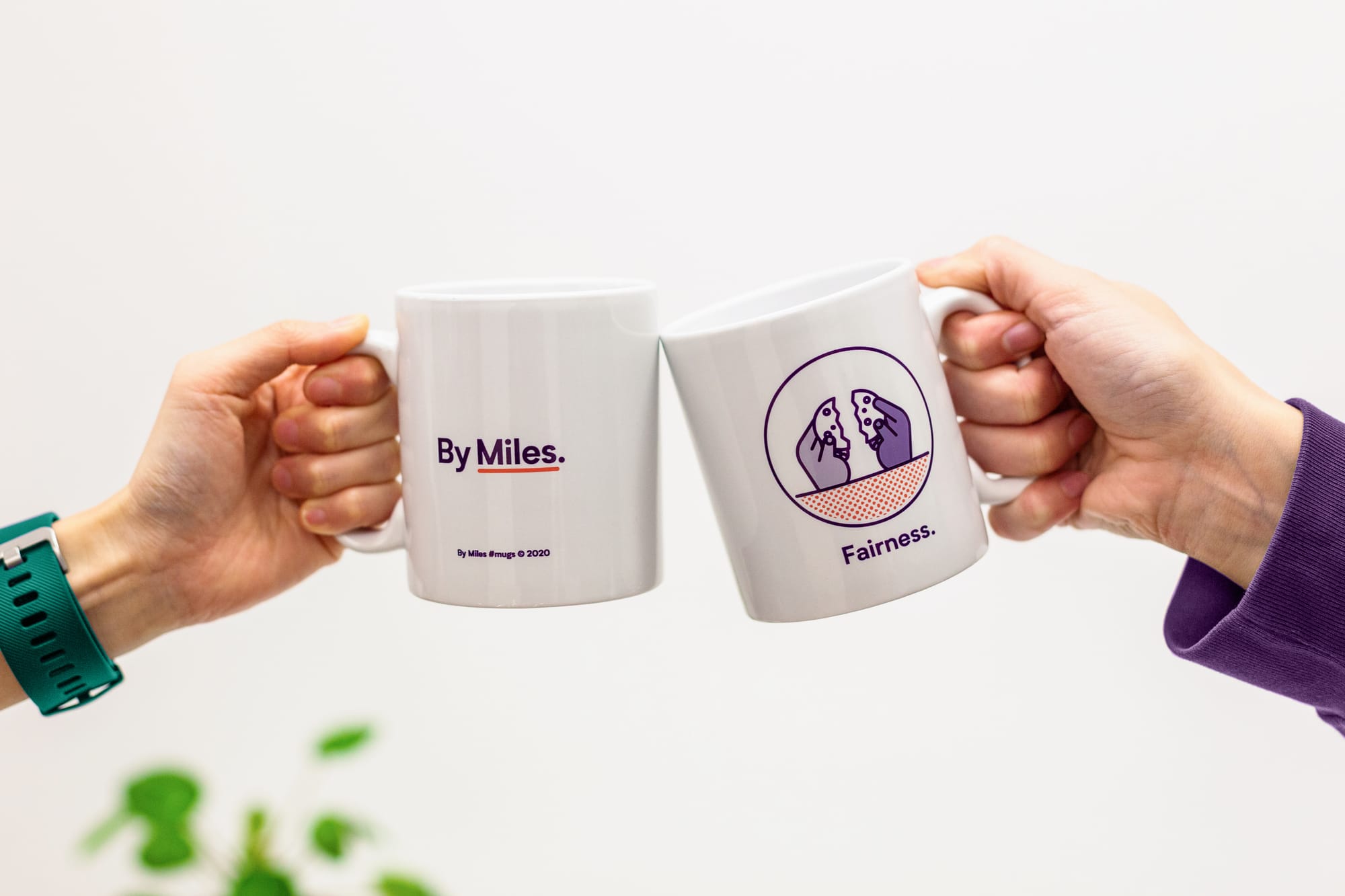
The By Miles tracker onboarding project started with a funnel metric and no explanation. The brief was to fix the screen. The research revealed a confidence problem that spanned packaging, emails, and support. We solved the right problem. Abandonment dropped by 12 percentage points as a result.
The Goal Isn't to Be Needed. It's to Make the People Around Me Not Need Me.
I've line-managed, and I've led through influence without formal authority. The difference taught me something important: the most lasting impact I've had on the people around me has never come from a reporting line. It's come from working alongside them closely enough to understand how they think, where they get stuck, and what they need to move forward on their own.
That last part matters most. I'm not interested in creating dependency. I'm interested in creating capability. The colleagues and collaborators I've worked alongside who've grown the most are the ones who stopped needing my input, not because I withdrew it, but because they'd internalised enough to trust their own judgement.
I want to help people find their own voice, not an echo of mine. Being a dad of three, all of whom have Special Educational Needs and/or Difficulties (SEND), has sharpened that instinct more than any professional experience. Patience, perspective, and the ability to meet someone where they are rather than where you'd like them to be. Those aren't soft skills. They're the work.
Most organisations don't realise they need better research. They're moving fast, shipping scrappily, and leaning on AI to fill the gaps. But building something faster without engaging your audience doesn't reduce risk. It accelerates it.
If you're looking for a researcher who will slow down the right things, question the brief, and make sure you're solving the problem worth solving, the work speaks for itself.