The Headlines
A single repositioned link. 37% more category engagement within one week. Returns cut from 51% to 36%.
At Next, a high-margin category was returning more than half its orders and the data couldn't explain why. I ran user interviews, competitor benchmarking, remote usability testing, and heatmap analysis. The problem was confidence and navigation. The redesigned journey delivered within days. Closing the returns gap took longer. That's the nature of behavioural change at scale.
Half of Every Suit Order Was Coming Back. The Data Explained the Scale.
In 2019, Next's Director of Ecommerce identified suit returns as a revenue problem that needed solving. As Senior Mobile UX Architect in the UX team, I was tasked with finding out why. I analysed orders, returns, and Google Analytics data alongside the Data Science team. The numbers pointed consistently toward one problem: customers didn't trust their sizing.
- 13% of customers ordered two sizes of the same suit — a direct proxy for sizing uncertainty.
- 1% ordered three or more sizes, each order compounding the returns cost.
- Fewer than 1% engaged with the Suits Fit Guide on product pages.
- 78% of suit transactions contained only a suit, with no shirt, tie, or accessories.
The data showed the scale. It couldn't explain the cause.
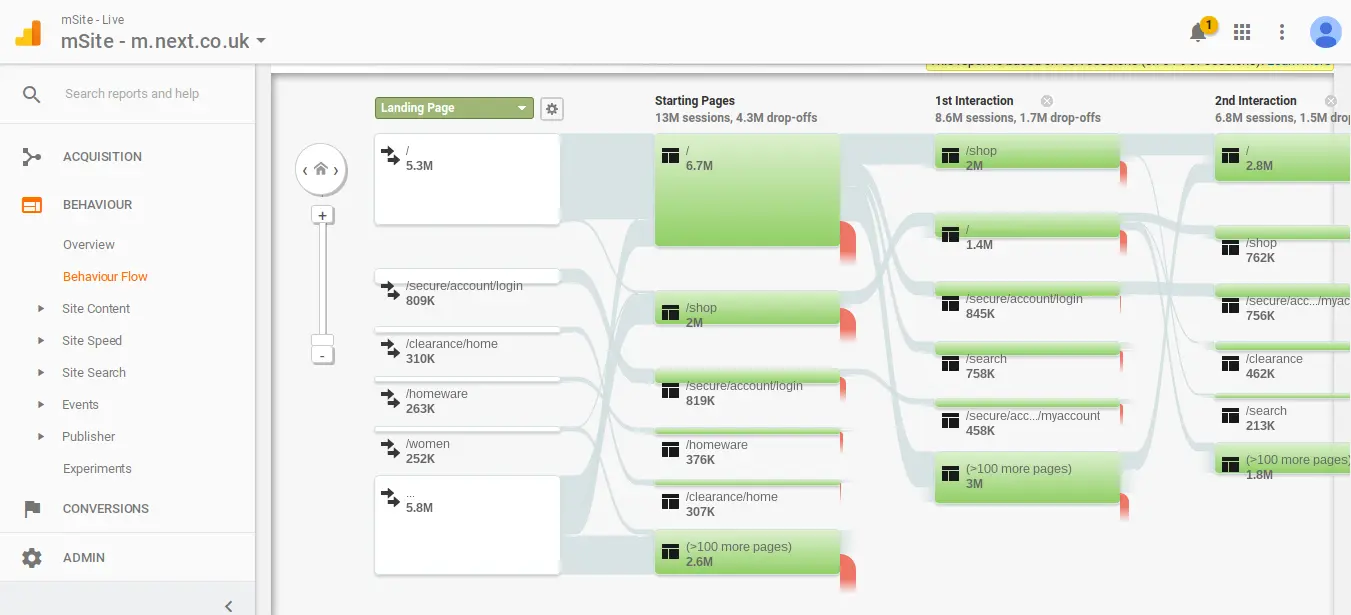
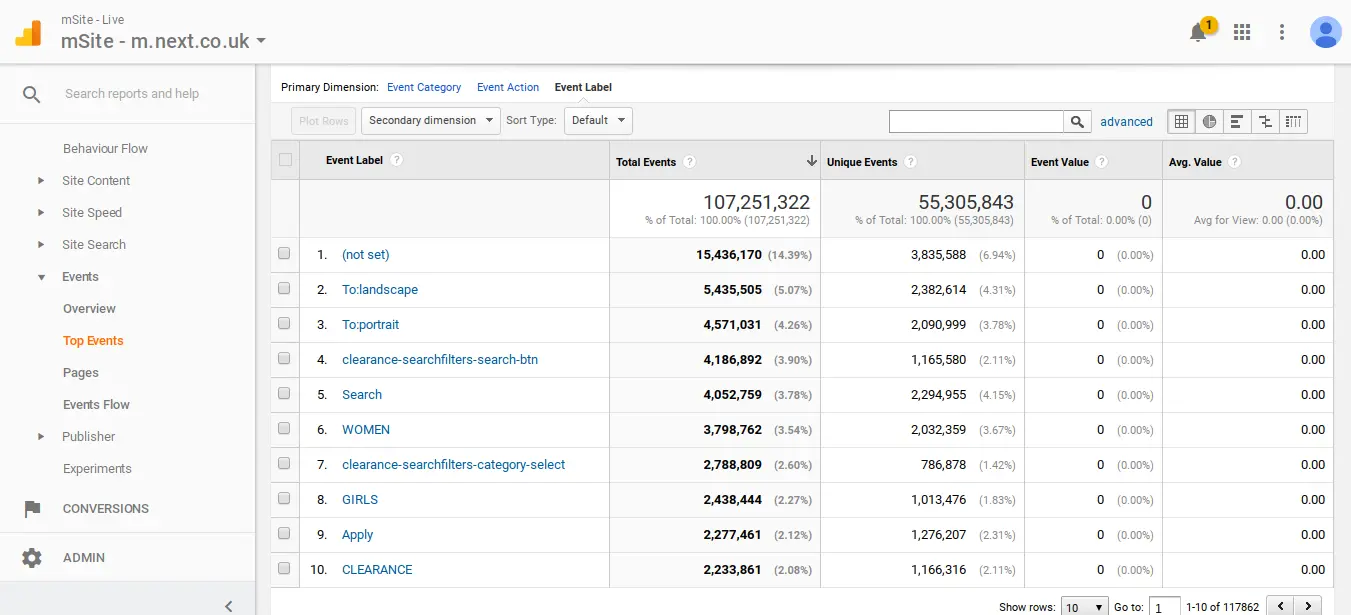
Orders, returns, and event tracking data analysed alongside the Data Science team. Two data sources, one consistent picture: customers weren't confident in sizing.
What the Best Suit Retailers Were Doing Differently
I analysed leading suit retailers and premium fashion brands, from Nordstrom to Combatant Gent, looking for where Next's suits journey fell short.
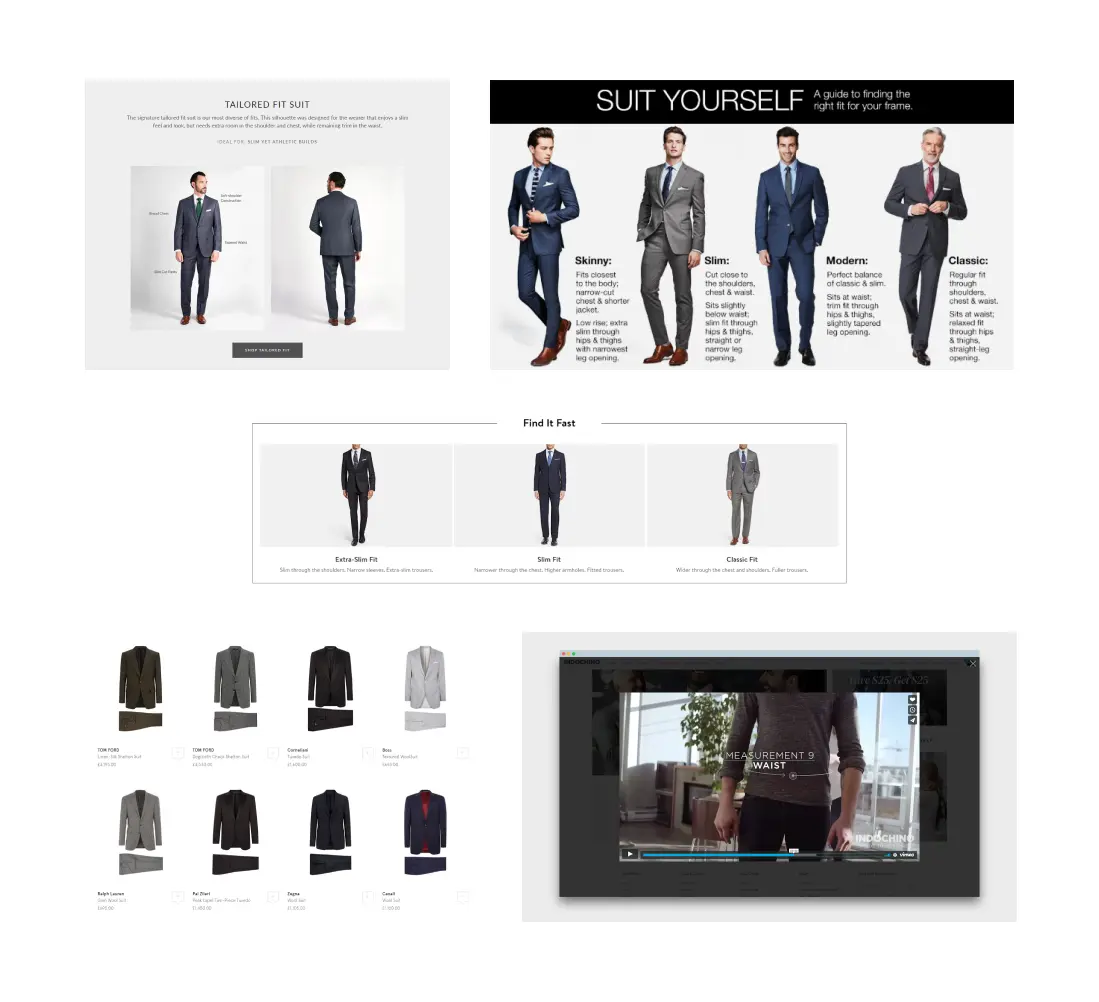
The strongest performers were solving the confidence problem before it became a returns problem:
- Free home try-on programmes, removing sizing risk at the point of purchase.
- Shop by Fit filters, letting customers narrow by slim, tailored, or regular from the start of their journey.
- Video measurement guides, building sizing confidence before the purchase decision.
- Visual fit breakdowns, showing customers what each fit style looked like on a real body.
Next offered none of them. The gap wasn't incidental. It was built into the journey.
What Real Suit Shoppers Actually Do
I ran seven in-depth interviews with active suit shoppers, six men and one woman. The goal was to understand how people approached suit purchases and where the online journey was letting them down.
- Suit journeys typically began in-store, where shoppers could touch fabric, try sizes, and speak to staff. Online came later, when stock or size availability forced the move.
- Sizing was resolved through trial and error, not guidance. Reviews were rarely consulted. The Fit Guide was rarely used.
- These weren't impulse purchases. Suits were replaced every one to two years. Customers were making considered decisions, often for significant occasions.
- The emotional stakes were high. Work, weddings, funerals. Confidence in sizing and fit wasn't a nice-to-have. It was load-bearing.
The online journey offered none of the reassurance that in-store did. That was the problem.

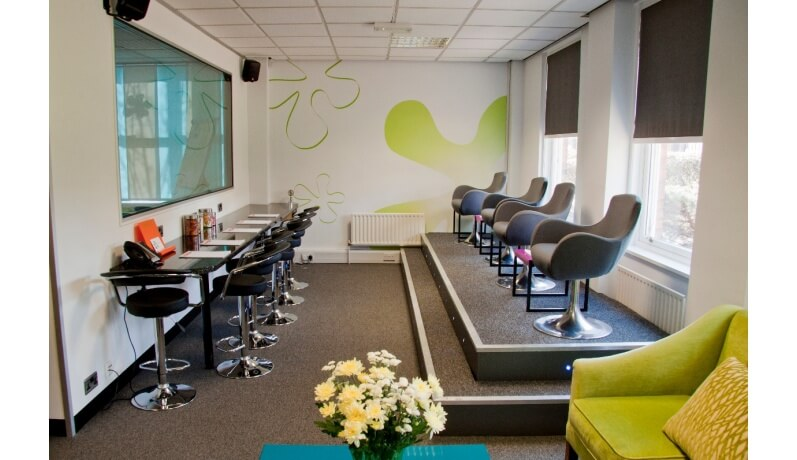
In-person interviews conducted at Babble Research in Solihull. Seven participants actively looking for a suit, recruited from across the UK to reflect Next's national customer base. Structured sessions designed to surface the behaviours and anxieties that analytics couldn't reach.
What Remote Testing Revealed About Next's Gaps
I ran remote usability tests via WhatUsersDo, asking participants to complete suit shopping tasks across Next, Nordstrom, and Combatant Gent on both desktop and mobile. The aim was to test the interview findings against observed behaviour and see how Next measured up alongside stronger competitors.
- Fit guidance was absent where competitors made it central. Nordstrom and Combatant Gent used imagery, filters, and measurement guides to build confidence at every stage. Next offered a Fit Guide that fewer than 1% of customers were finding.
- Richer imagery reduced hesitation. Participants responded more confidently to competitors' visual presentation of fit styles, giving them more to work with before committing to a size.
- Next's Suits category was effectively invisible. Participants couldn't locate it unaided, while competitors surfaced suits prominently from the homepage.
The interviews had identified the confidence problem. Remote testing showed precisely where Next's journey wasn't addressing it.
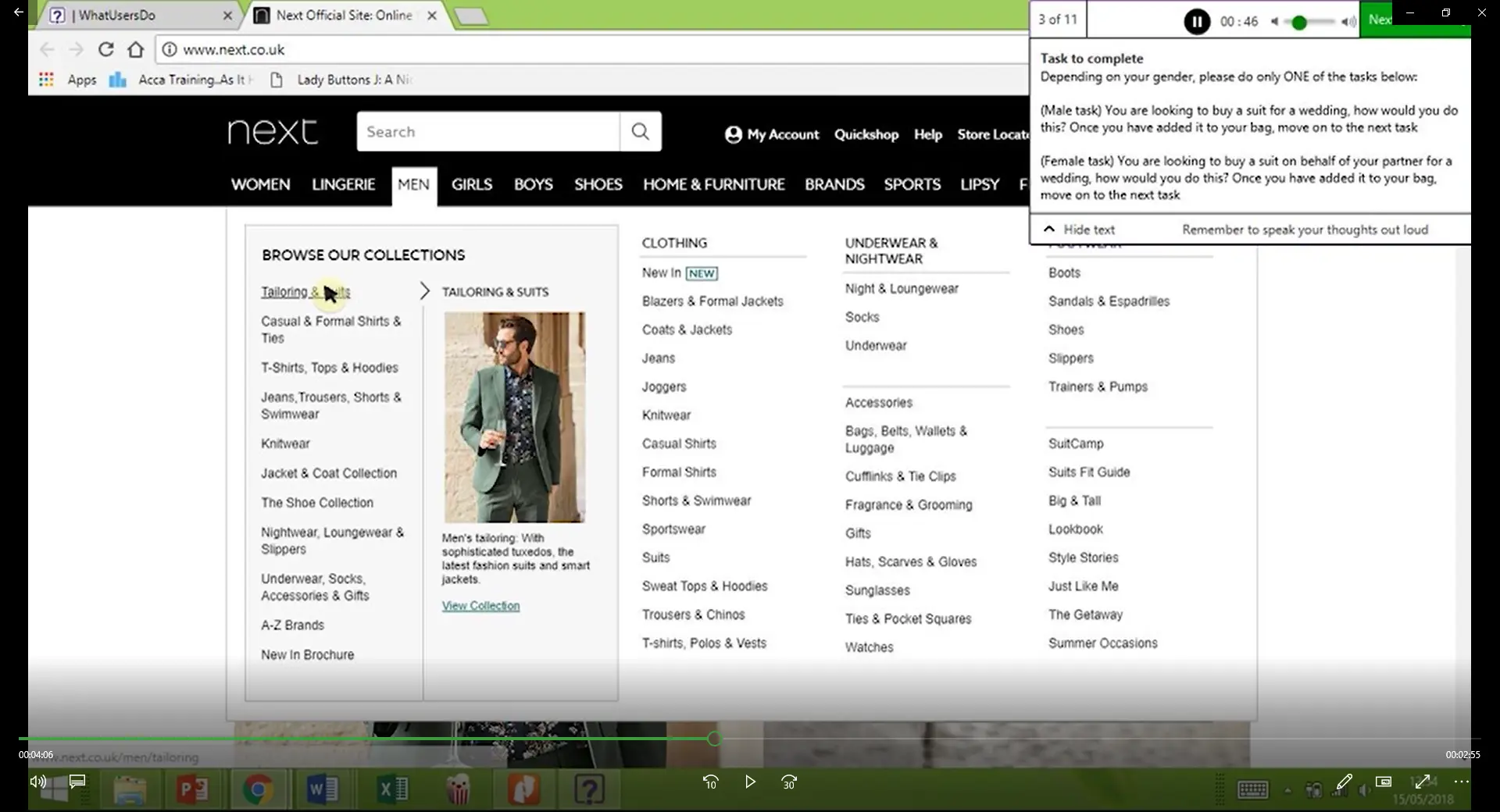
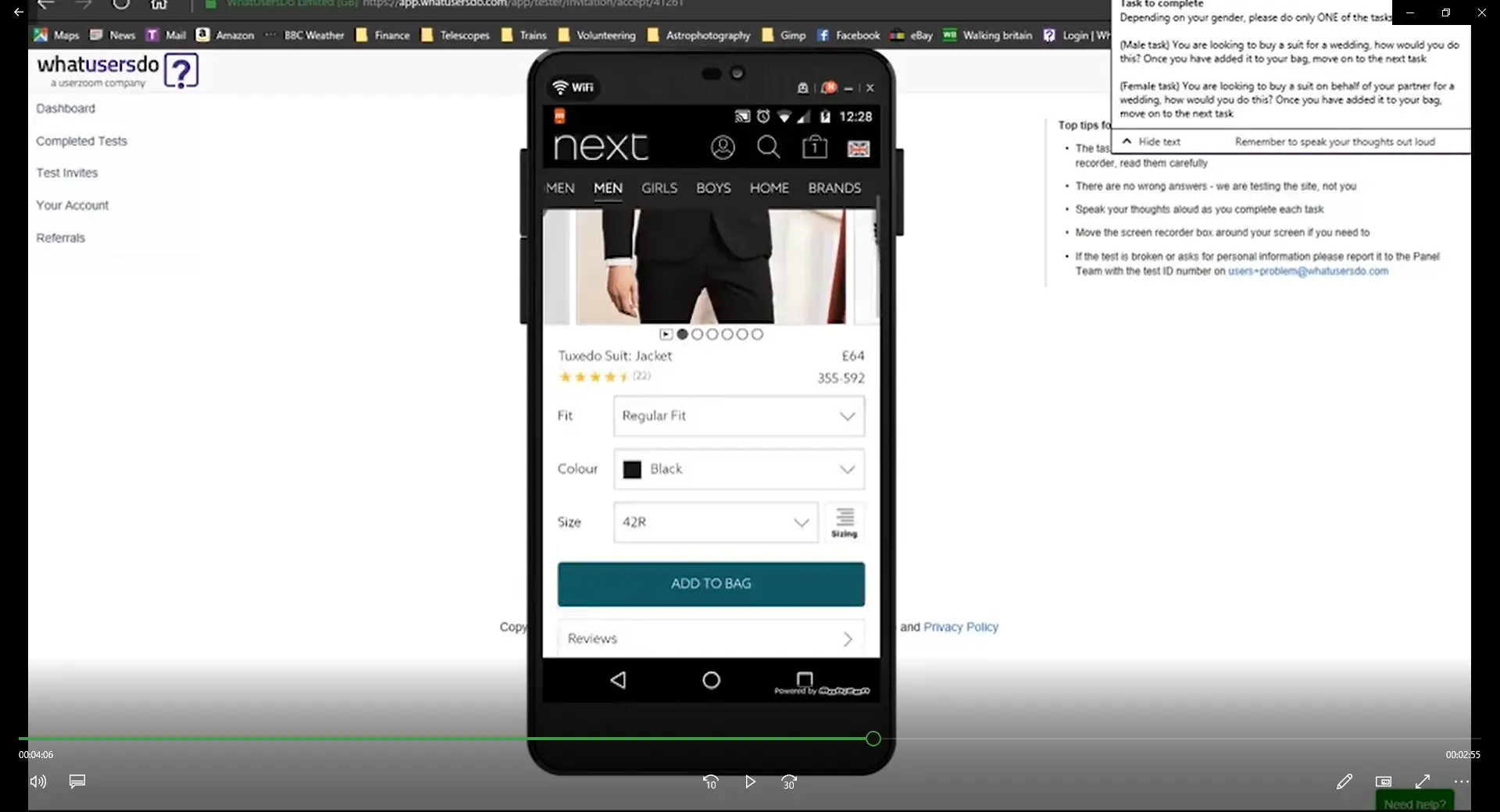
Two participants. Two devices. One task: find a suit for a wedding. The WhatUsersDo recordings captured exactly where Next's navigation lost them — before any recommendations were made.
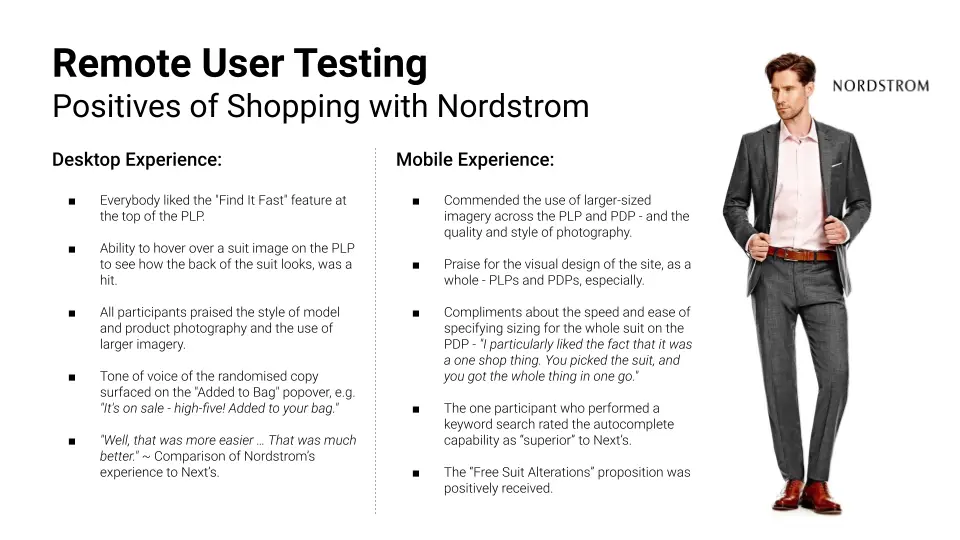
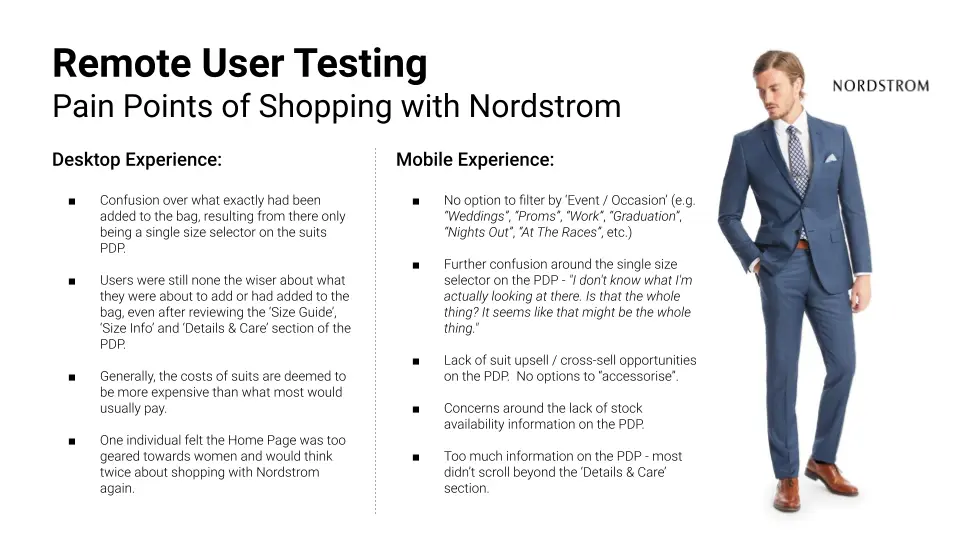
Nordstrom benchmarked across positives and pain points, desktop and mobile. Even the stronger competitor had sizing confusion and navigation gaps. The gap between Nordstrom's worst and Next's best was still significant.
A Small Change With a Clear Evidence Base
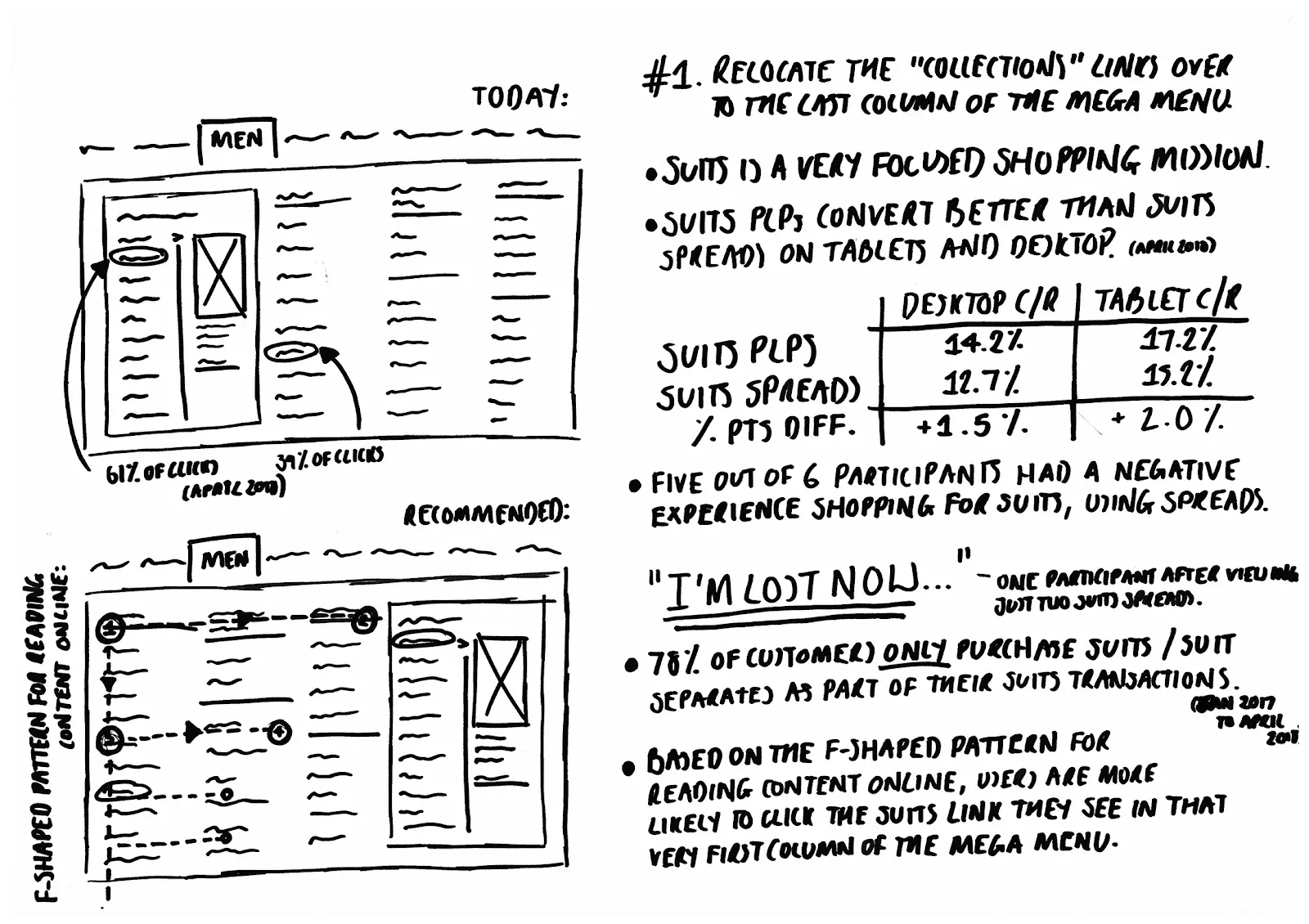
Heatmap analysis confirmed customers were scanning in an F-pattern. The Suits link sat outside it. For a destination category, customers don't browse into suits. They come looking for them. That made visibility a significant barrier.
The analytics, interviews, benchmarking, and remote testing had all pointed to the same gap. I brought the finding to the Category Manager, made the case, and recommended the change. It was live within days.
The intervention was simple. The work behind it wasn't.
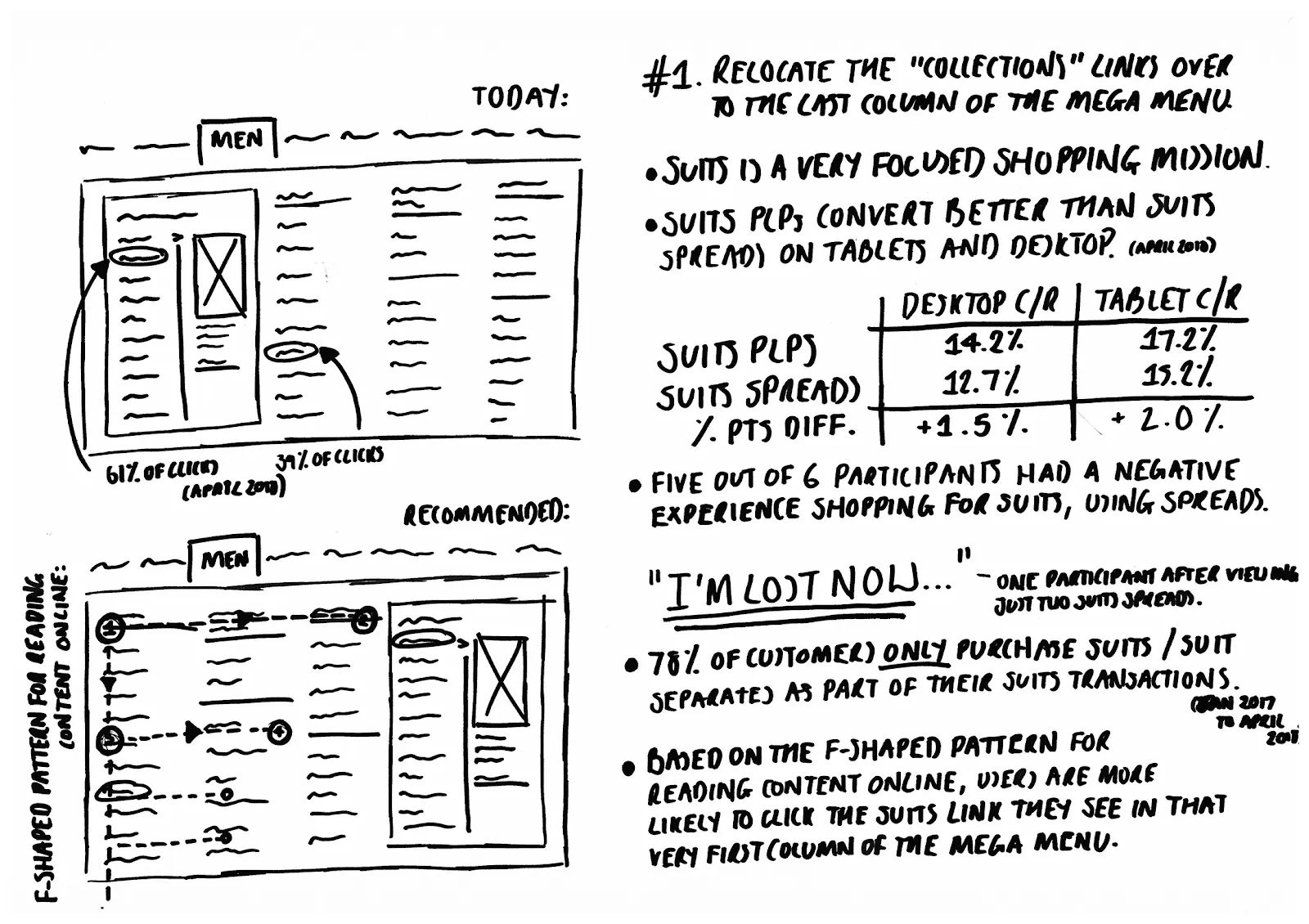
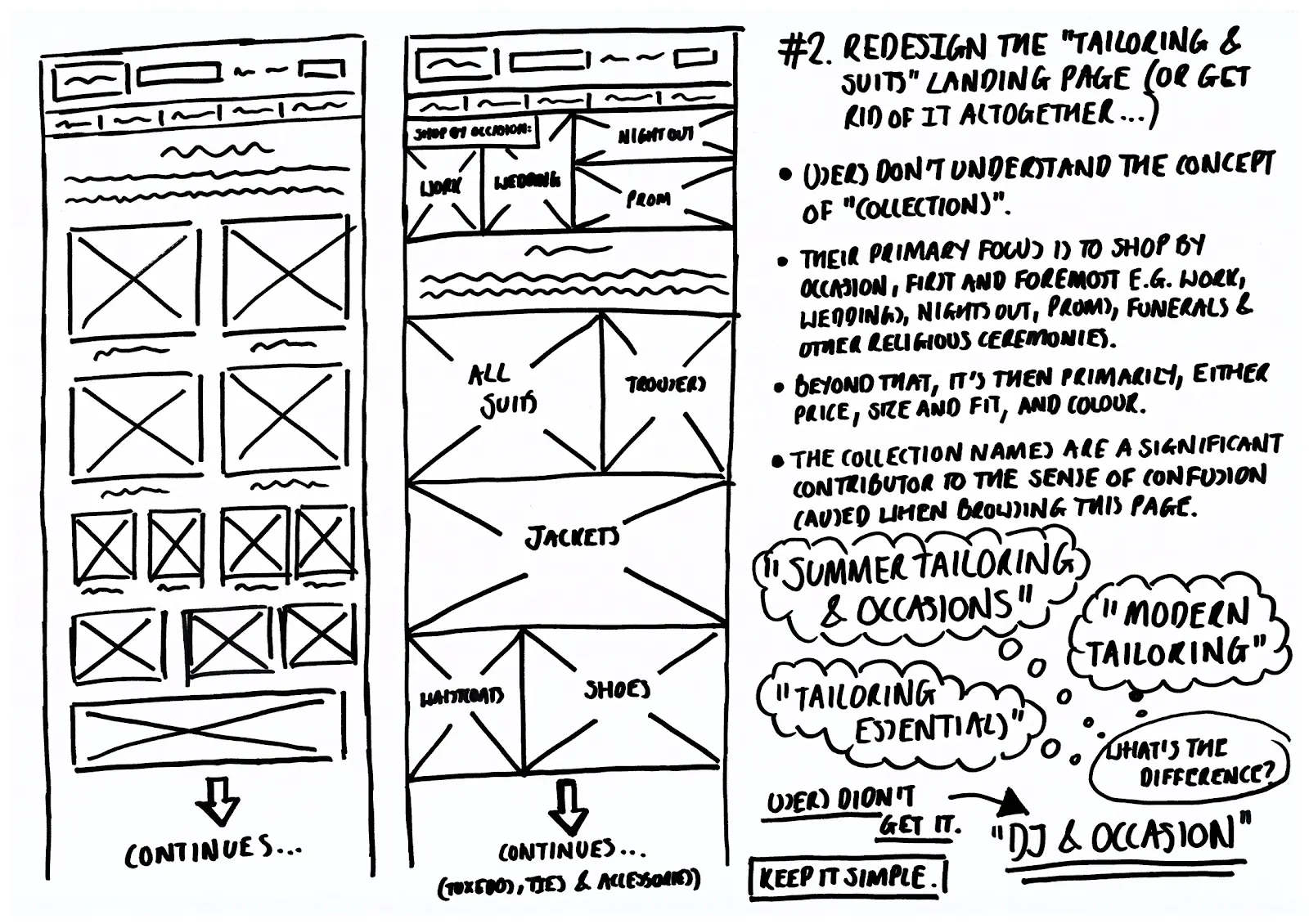
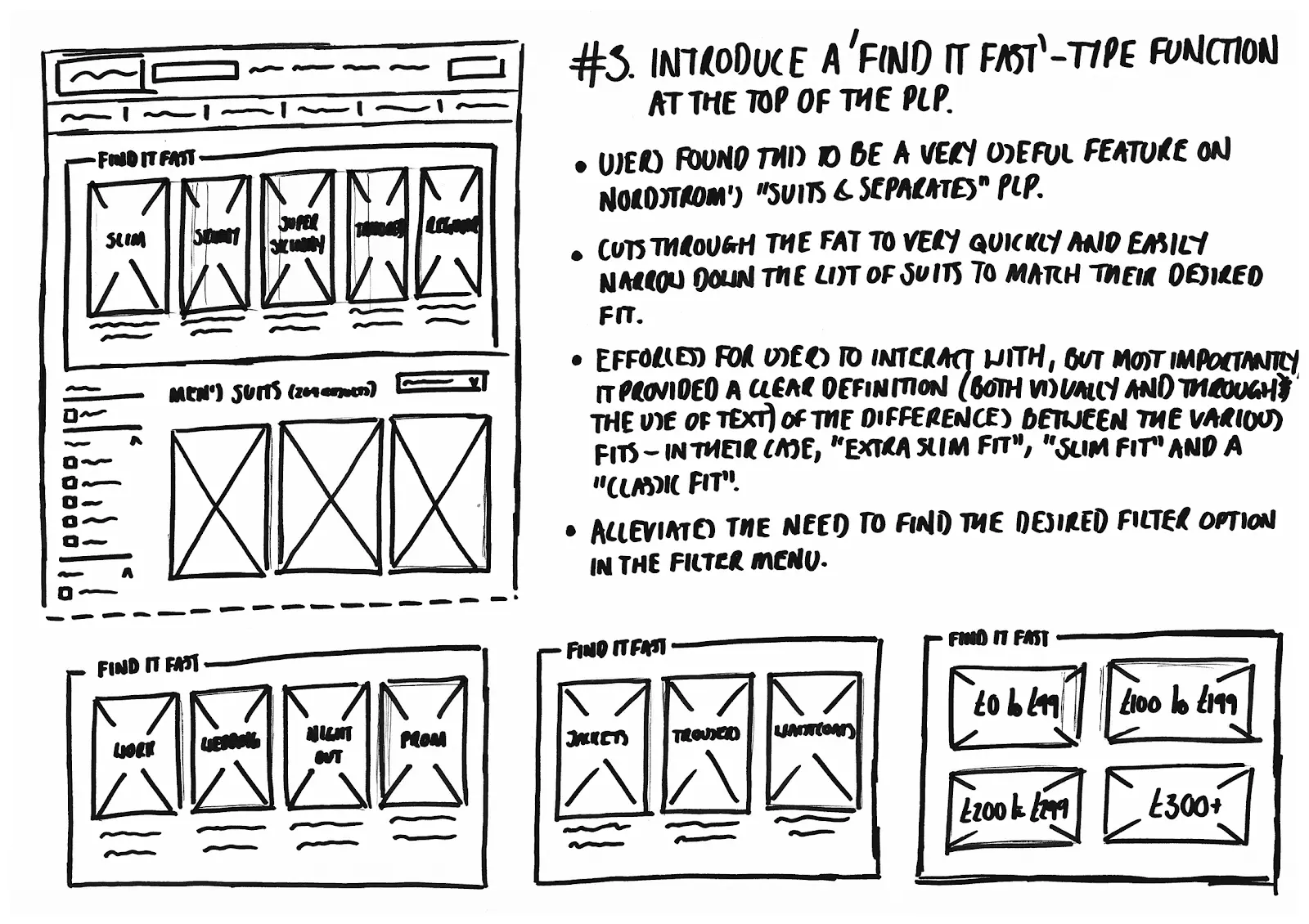
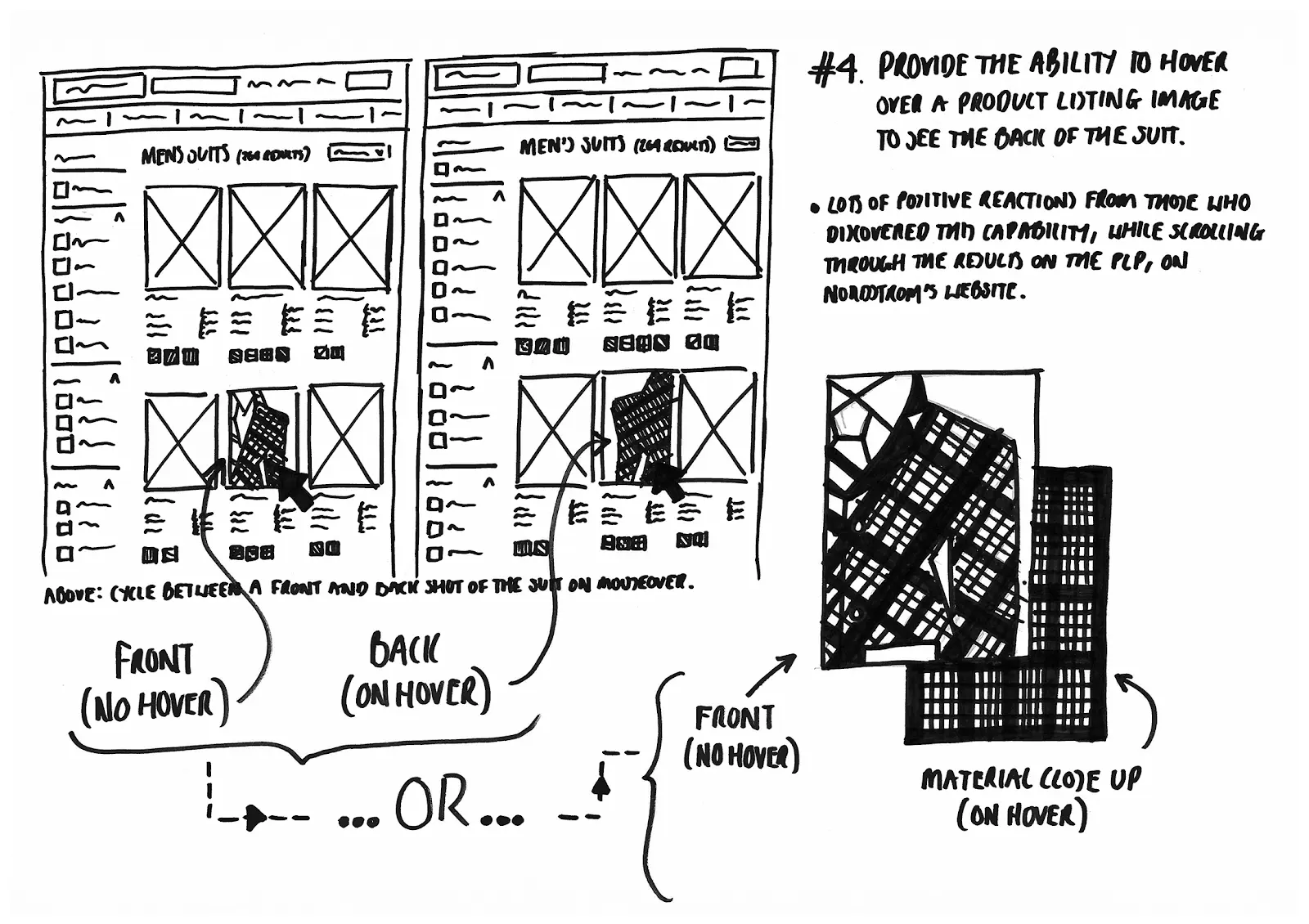
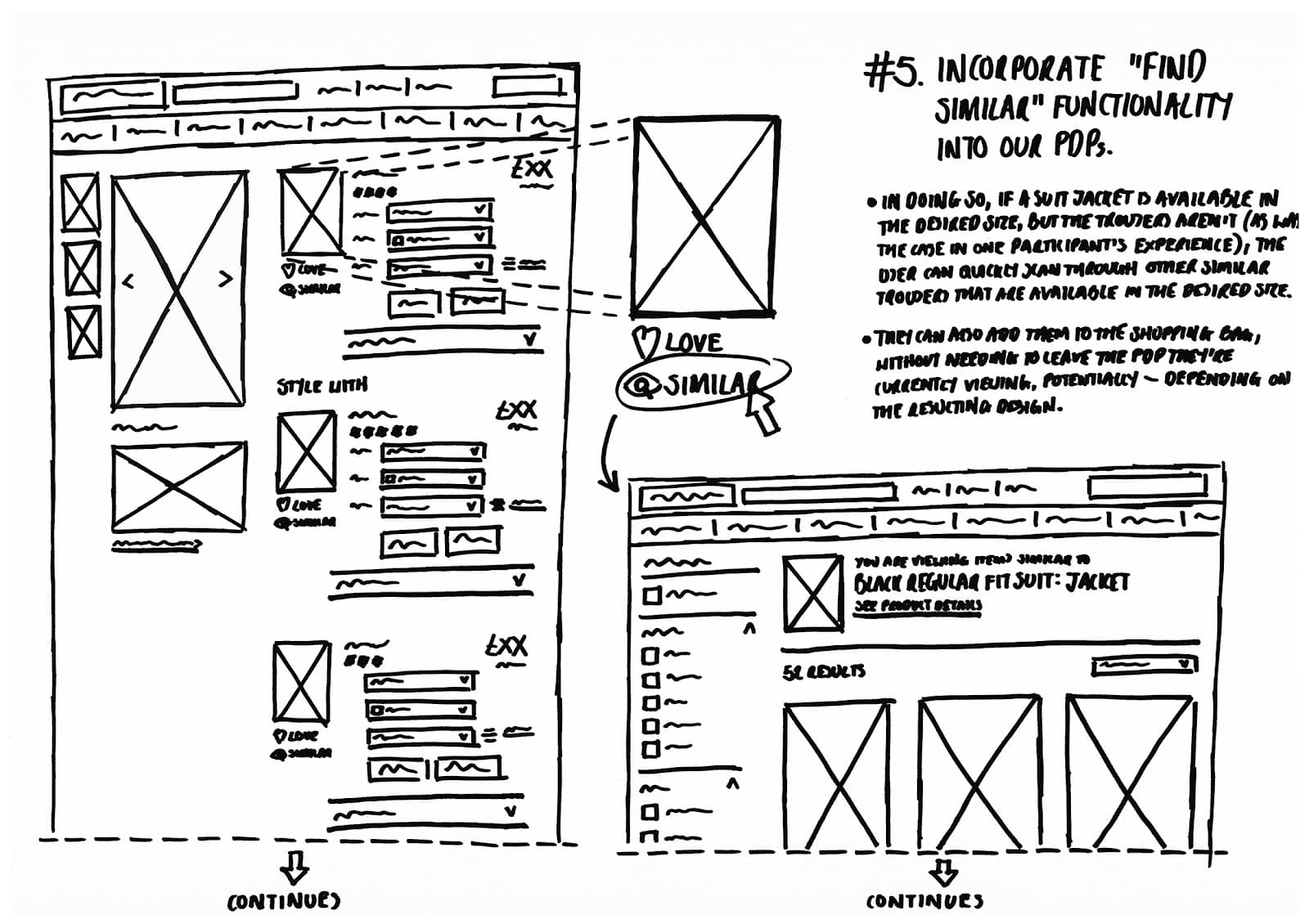
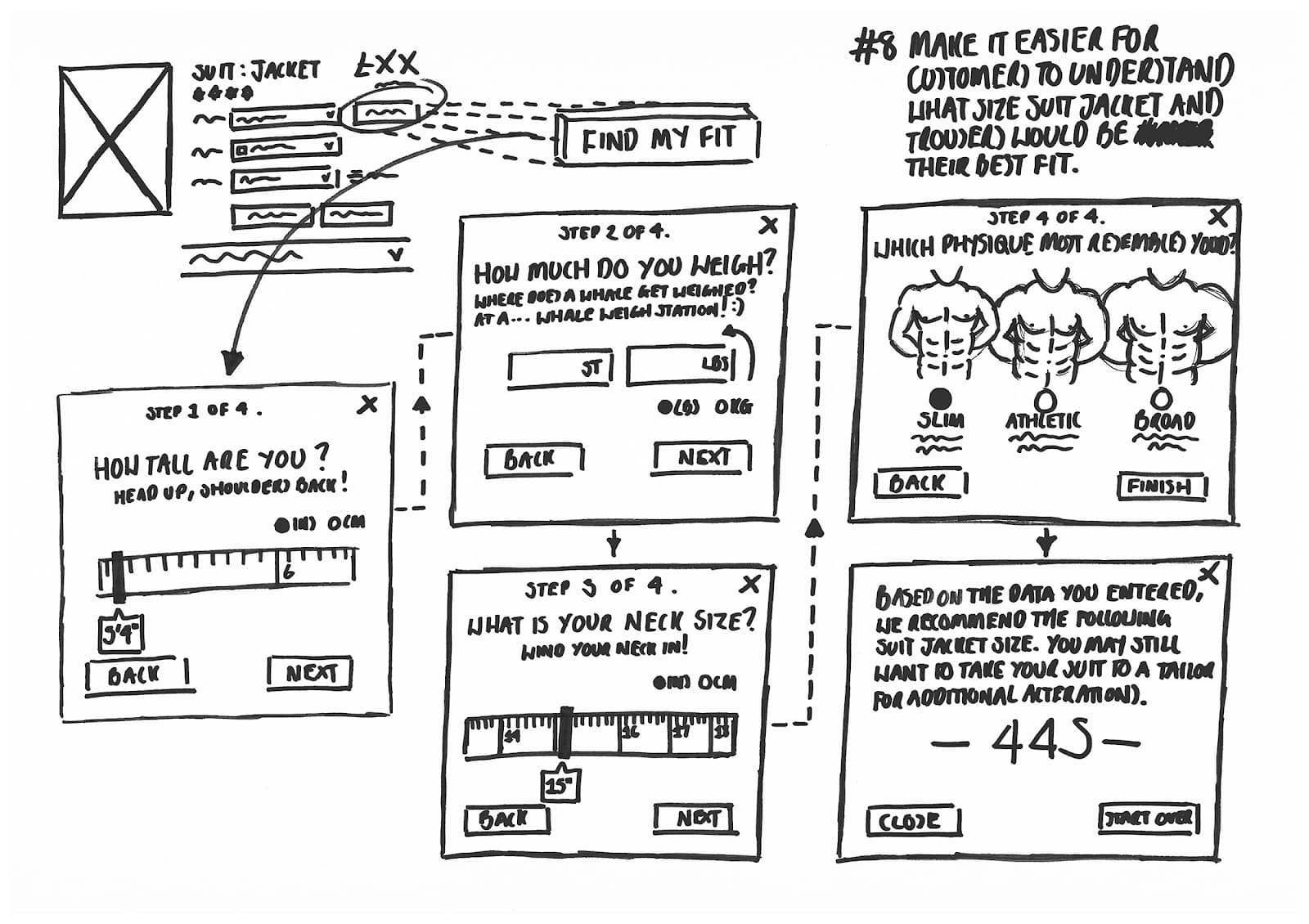
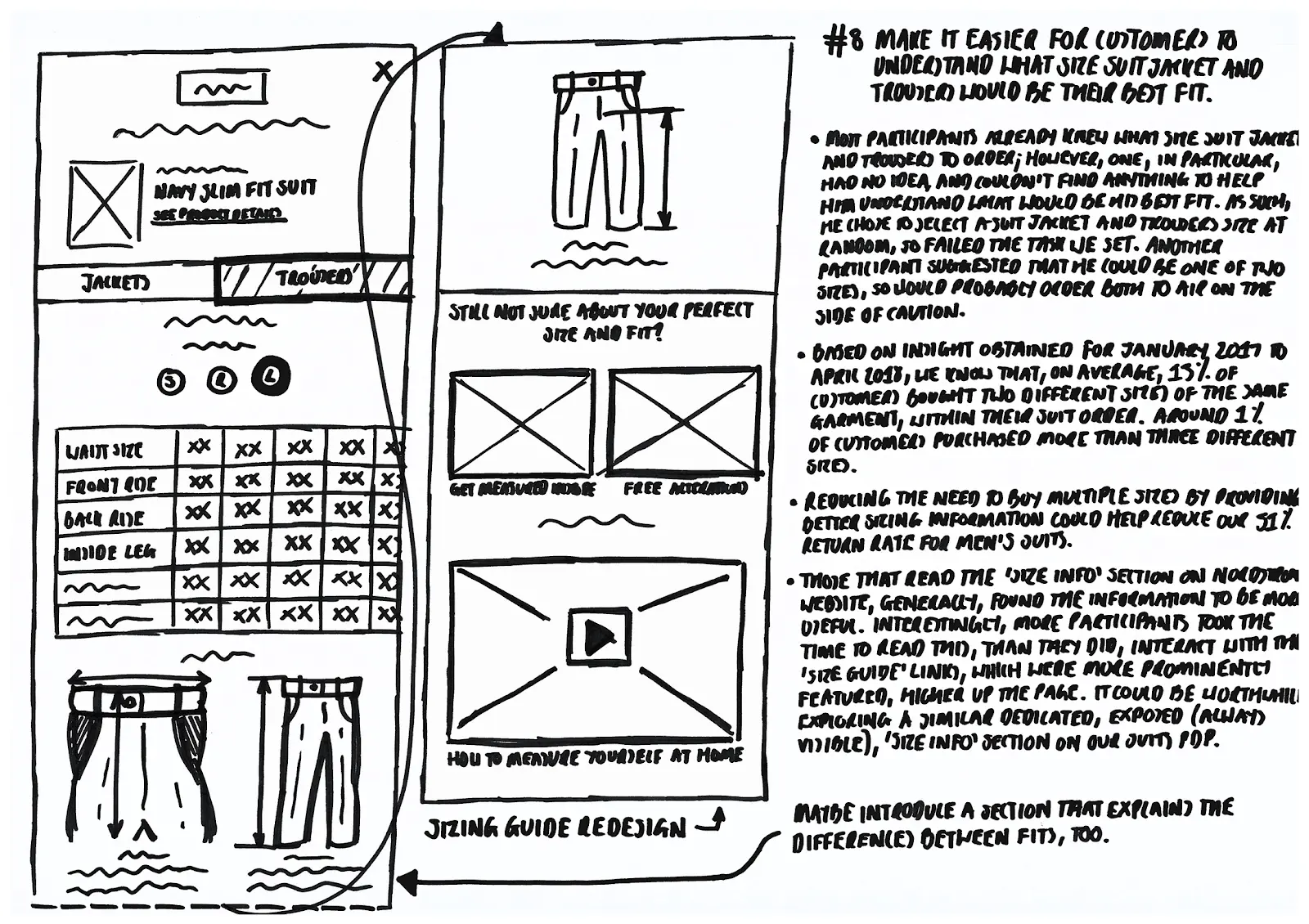
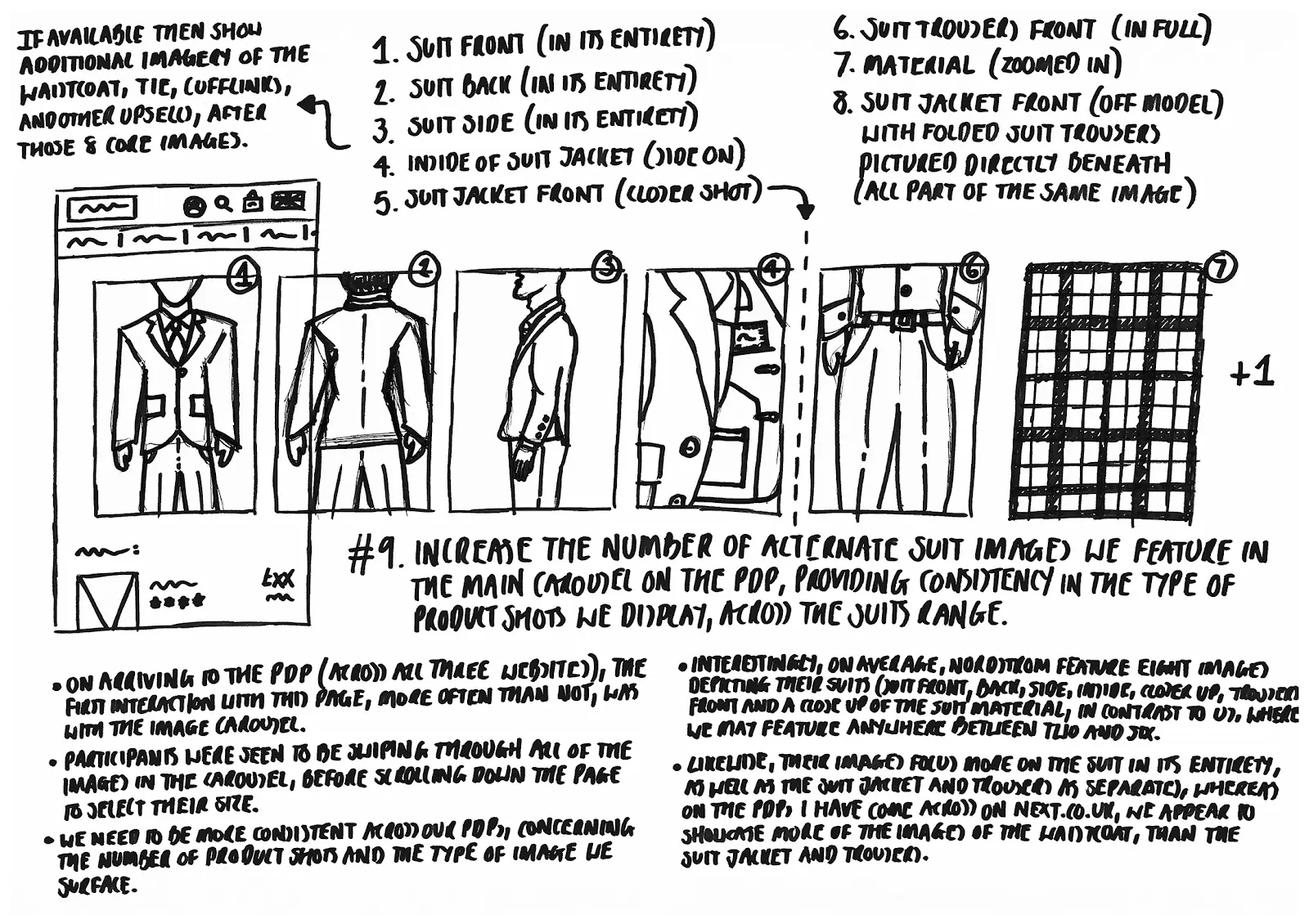
Eight evidence-led concepts, all proposed for implementation. The navigation repositioning went first, lowest effort and highest confidence. The rest represented the broader roadmap for a category that had significant ground to recover.
What Changed Within a Week, and What Took Longer
Within one week, clicks on the Suits category link were up 37%. Repositioning a single link had removed the primary barrier to finding the category.
Returns moved more slowly. The rate began trending toward the menswear baseline of 36%, down from 51%. Interaction with the Fit Guide and sizing information also increased, suggesting the content changes were contributing alongside the navigation fix.
Two types of change, operating on two different timescales. The research had pointed to both. The results confirmed them.
What I'd Do Differently, and What I'd Defend
The interview sample reflected the core customer but not the full range. Six men and one woman covered the primary audience, but broader representation across body types, price points, and wearing occasions would have added depth to the findings — particularly around fit confidence, where experience varies significantly.
The engagement result was clean and immediate. The returns result was directional. A controlled A/B test would have isolated the navigation change from other variables and produced a more defensible outcome. On the burger menu project I held that standard, running three rounds of live testing across real traffic. This project would have been stronger for it.
The 78% of transactions containing only a suit pointed to something the project never fully addressed. Shirts, ties, shoes: the accessories that complete an outfit. They represent both a revenue opportunity and a returns mitigation strategy. A customer who buys the full outfit has made a committed, considered purchase. They're less likely to return it. That thread was never pulled.